A DIFERENTE CULTURA

DSCN0314So many things, mostly simple and small; Yet all adding up to an experience quite special.

Driving: You see alot of “4 ALTO” while driving. They look familiar: Octogonal signs at intersections, red with white borders. They are not “Stop” signs, though. There are a  number of stories of Grigos being pulled over for stopping completely at a “4 Altos”: dangerous – inviting a rear-end collision. Driving here is more organic, interactive – it flows. EVERYONE at an intersection knows exactly the order each vehicle arrived and that is the order (without exception!) that cars proceed.4 Altos

The proper procedure is to slow enough to see who else is there: if no one, roll on thru at around 5 – 10 mph. If others are already present, slow down enough to give them their precedence, but try to keep rolling. If you’d like to see the “Mexican Stink Eye”, try going out of order at a “4 Altos”. The rebuke is not subtle. And, if you fail to proceed when it’s your turn, no one will wait for you although those going in your stead may hurl a friendly “Puta Madre'” (yeah, sound it out) in your direction

.
On the other hand, although I’ve driven here for several years now – it is very, very rare (much more so than in the US) to see dented cars or accidents. Everyone knows there’s alot of bad driving so they are more careful. As an example, I ride my bicycle as often- as I did in Oregon and Washington (two of the most bike friendly/aware states).
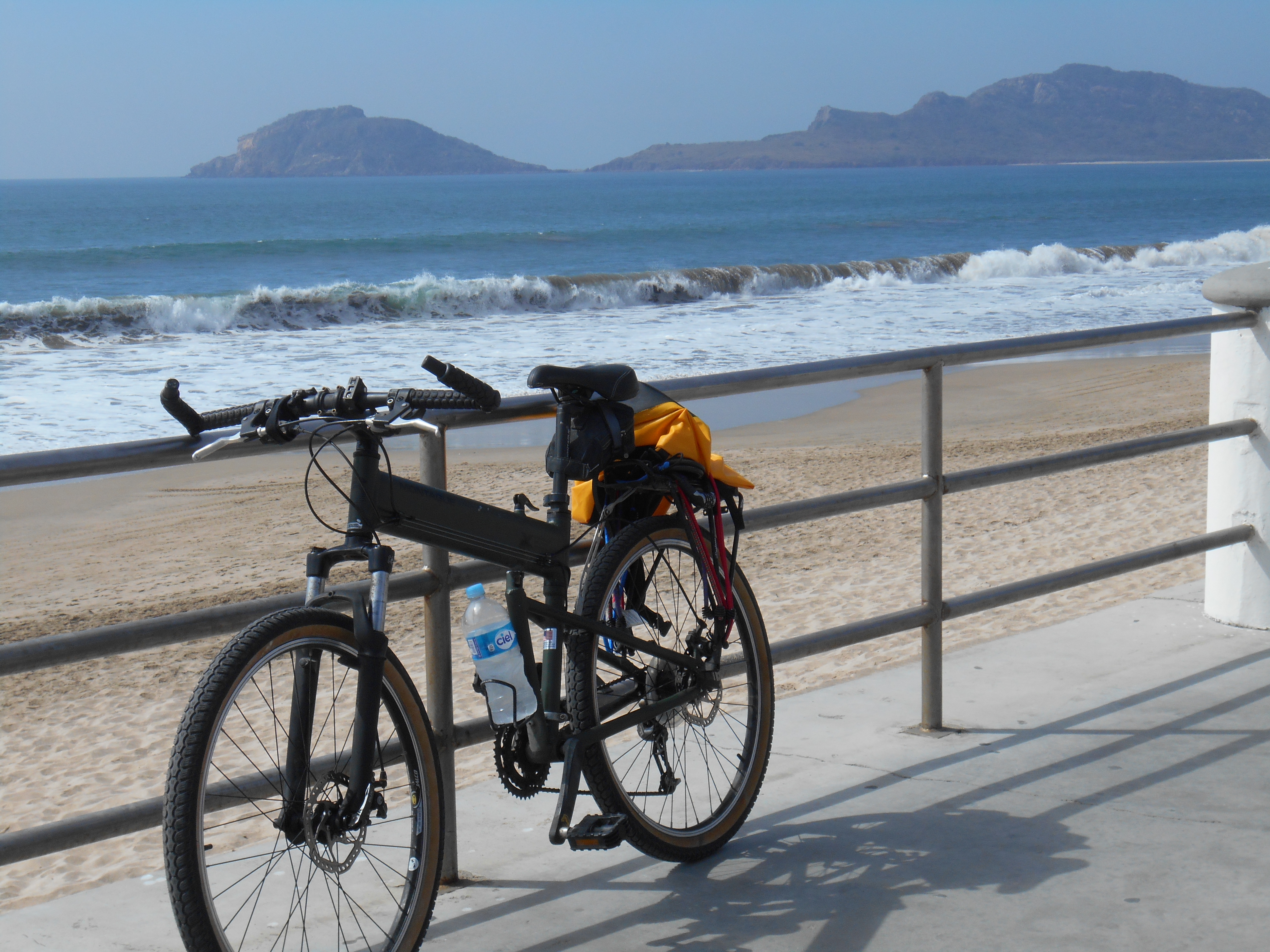
Malecon Bike and SurfAnd, there have been far fewer “close calls” (swervers, potential “car dooring”, intersection roulette, etc) in Mexico. Partly, that is because the people are much more courteous. Here, pedestrians (and bicyclists) really DO have the right of way. There are ALOT of Policia on many street corners whose sole responsibility is to make sure that pedestrians crossing the street do so at their choice of time and place and without molestation. Of course, that does make driving more interesting because people are likely to “pop out” without alot of warning. So, here – people yield to people and not machines. It is charming to be at the curb and routinely have Mexican drivers in all lanes stop for you to cross.

Pedestrians crossing
There is not a speeding problem in Mexican towns. No, they don’t have alot of chubby cops dressed as storm-troopers hiding with their little radar guns. There’s no $160.00 tickets for going 10 mph over, no judges to glower at you and your insurance premiums don’t go up if you speed.
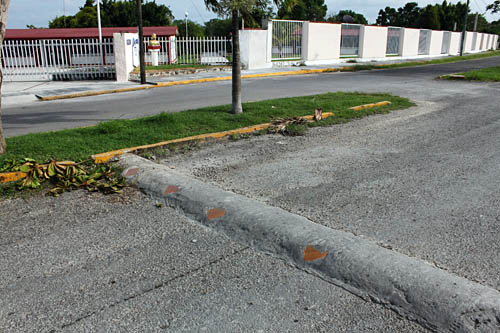
Speed_Bump_Bacalar That’s because of the practicality of Mexico. If they want you to slow down in a certain area, they lay down a BIG non-subtle speed bump (they are everywhere: some with signs and some not). You nail the same “tope'” at speed only once: the wheels leave the ground, your head hits the ceiling and contents go flying about. I figure the average suspension has a lifespan of about 75 -100 tope encounters.

And, although occasional encounters with polite and smiling “Policia Municipal” are common, I’ve never heard of anyone getting a ticket. No, rather than the $100 – 200.00 ticket you can expect to see from you local ill mannered, rude and abrupt US SS-cop, the pill here is far more palatable. It’s called “Mordida” or official bribe-taking and it is well understood, mostly accepted and practiced through-out government (espcecially by traffic cops dealing with Gringos). In such cases, there is a street theater that has certain moves. You are pulled over, usually, for “DWG” (Driving While Gringo: not unlike the numerous “Pretexts” offered by our home-grown officers). The initial move is the most importante’. If you are “stupido'” enough to furnish a real (ie “official”, stiff) US driver’s license your mordida just went up exponentially. That’s because you either pay the extravagant mordida demanded (2000 pesos – still, at an exchange rate of 14;1, it’s less than $200.00), or the cop just walks away with your license and you’re screwed when you get back to the states.

Mordida
The necessary “gear” for a DWG traffic stop is a color laser-print (laminated) copy (ie fake and limp) of your ID, a camera(ie smart phone), a piece of paper & pen – and a two hundred peso note all in an envelope above your visor.
As the Policia officer approaches with his big smile, you smile back and hand him your copy of the license, pull the camera – point and click, while saying “Sonrisa” (ie “smile”). After the pleasantries where you confirm you’ve given him your only ID, he will list all of the many infractions and the horrific fines associated with them. You say nothing but continue to smile. If he becomes in any way gruff, you simply ask to be taken to the station to talk with the commandante. You also begin writing down his name, his car number, license number. A pal just told me of a beautiful move I’m really looking forward to: you act like your smart phone is on “record” while keeping him “in the picture” and asking “Por Que Halto y Que Quantos” (why stop me and how much?).
Once on level ground the friendly negotiations begin. He will start very high. You do not respond with a number, only a smiling/giggling “mas too mucho” and repeat the request to be taken to the station (which will eliminate his goal of pocket money and take alot of time). You can never be in a hurry during such negotiations. It’s best if they occur on a hot day while he is outside in the sun and your air-conditioning is keeping you cool. At some point he will ask you you if would prefer to resolve the matter informally, for less. THAT is where the negotiation really begins. You offer 50 pesos. He is insulted. He returns with 500 pesos and you’re aghast (have fun! “Por Favor – No Hable'”). The going rate (which everyone knows) is 200 pesos (or about $15.00). Once there, you are careful to not show any more money ( I have a special “mordida kit” containing only a single 200 peso note, pen and paper). You hand him the money, shake hands, and wish each other well.
You’ve made a new friend since he is happy and you’ve saved alot of money compared to a far less pleasant state-side encounter; and he can bring something special home to his ninos or his mistress. Mui Bueno.
It is fun to watch new or ignorant Gringos interact with locals, including store clerks. They will swagger up (like they do in the states), and abruptly demand what they want, in English – and either wait, pay too mucho, get inadequate cambio (change – which they rarely recognize) or learn that no such items are present.
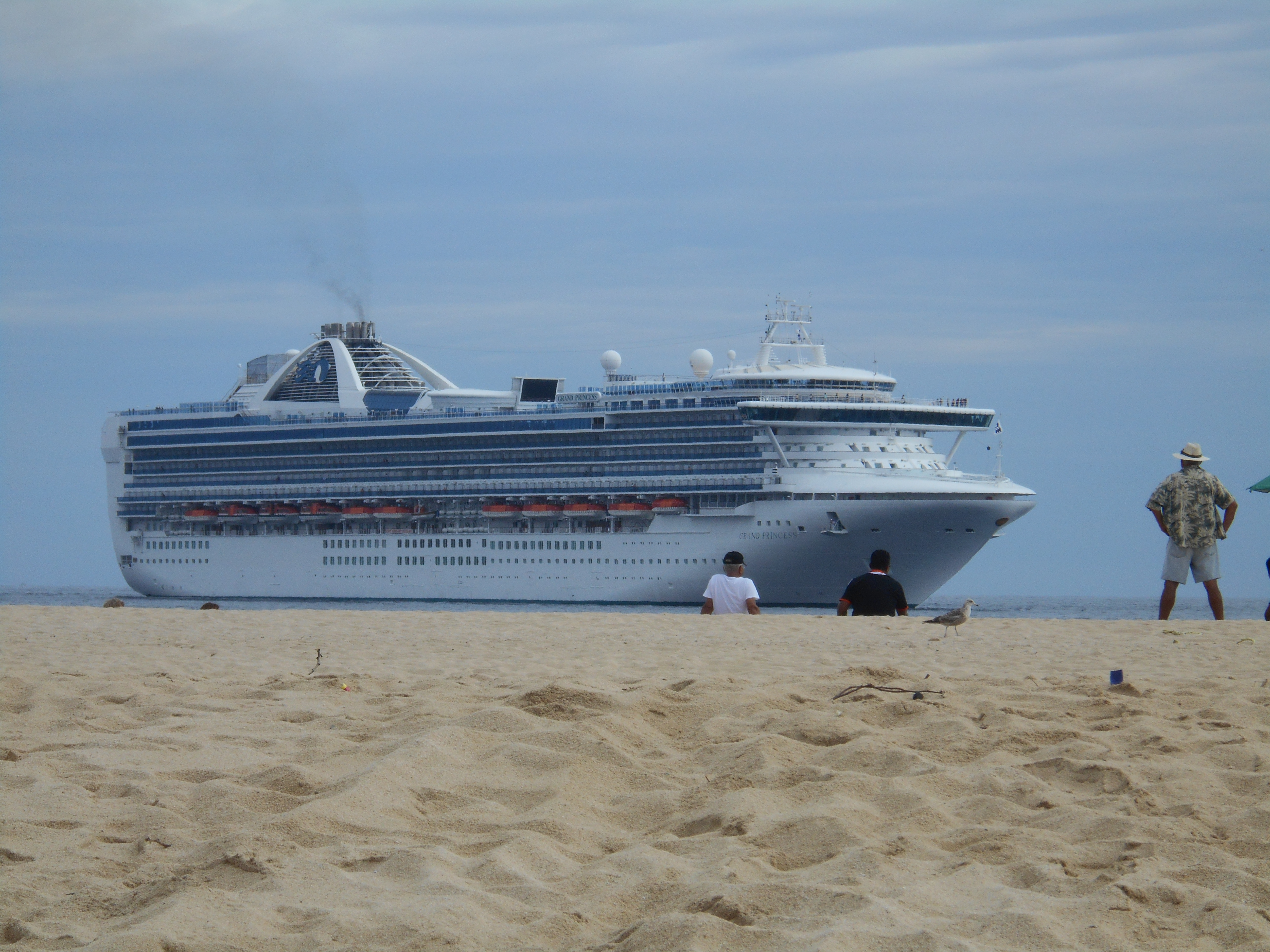
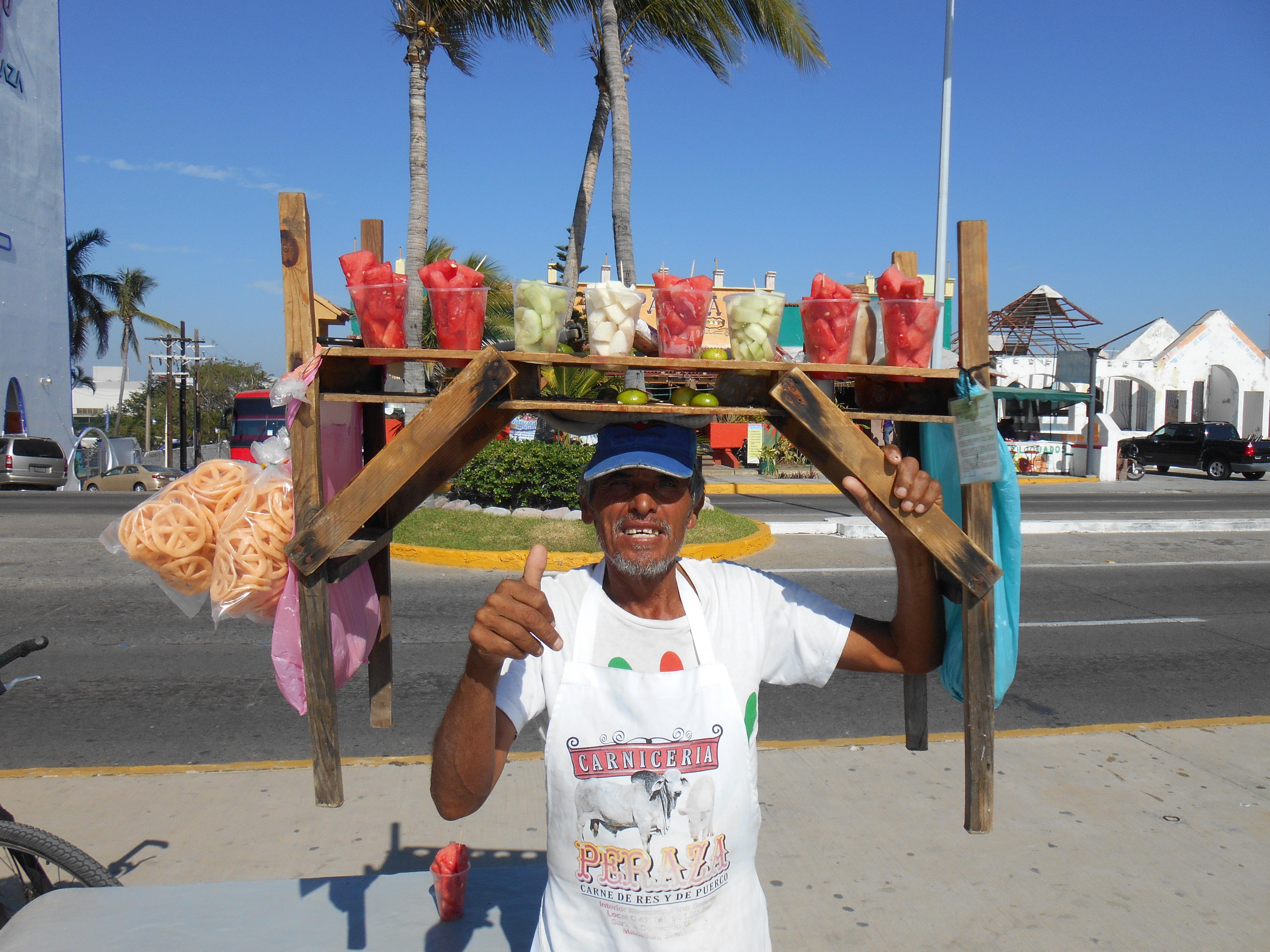
DSCN0748 That’s because the mode of interactions are reversed in Mexico. In the states, it is business before pleasure or pleasantries. You could go to the same US store for years and never know the clerks name, whether he is married or has ninos. In Mexico, things are more formalized and more personal.Things take more time. It is good.There is a necessity of greetings,”Hola…Hola – Buenos Dias/Tardis or Noches – Como Esta?…Bien, Gracias…Usted?….Bien, Bien, Gracias”, perhaps some discussion of the weather or family….No Rush…. Perhaps you ask his/her name and give them yours…Mucho Gusto! Only then, do you enquire (preferably in Spanish), “Do you have” (ie “Tiennes”)_____? They will now truly try to help you. If they don’t have it, they will tell you where to get it. And in any case, they are far more friendly and accommodating to Gringos speaking English than many of our Red-neck countrymen spewing, “Speak American or get out of the country”

You actually have encounters – rather than exchanges. And, of course – if one is too importante or busy for such things, the cultura will slow things down for them. It is the same when dealing with government officials. Be nice! You begin to feel far more connected and happy when this is practiced consistently. And, you will be greeted warmly wherever you go. You will know the names of the people around you and they will know yours – kinda like a Spanish “Cheers”.
Fruit Head Close Up
If you care to become a permanent resident alien (easy to do), you will get very good health insurance for only a couple hundred dollars a year – and (yes!) a “Green Card”. This eliminates the need to leave the country every six months and raises your esteem with the locals who know you are trying to assimilate.


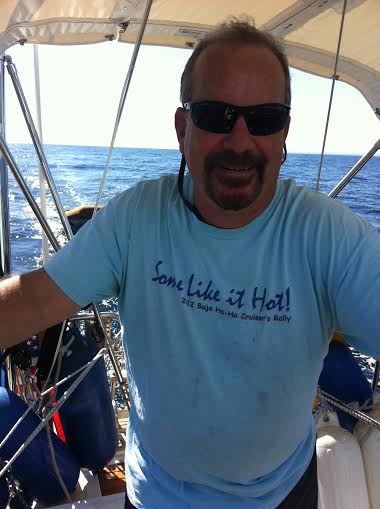
Cruisers (ie those of us that live on Boats) have an informal dress-code: Flip flops, shorts and Tees.me sailing shades 2 ‘Pretty casual.If the shirt has a collar (even if dirty), we’re dressed up. And, of course, we think nothing of it. We even leave the docks and go into town like that. Until one befriends some locals and is informed – with great embarrassment to the teller – that cruisers are pitied because they dress so shabbily and smell bad. We have it so ingrained in our consciousness  that we are the superior ones – living in a third world country with Third World people – that we fail to notice that most of the cars are as new (if smaller) than in the states; almost all (rather than a small majority) of cars are spotlessly clean.
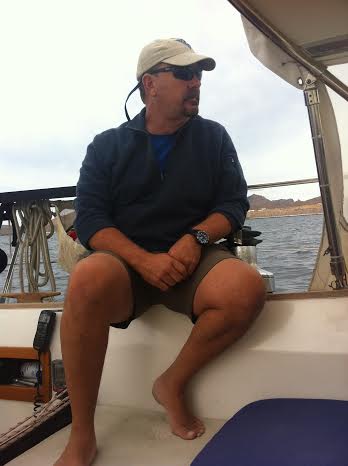
We don’t see that our hosts rarely wear tennis shoes or jeans, preferring nice leather shoes and slacks with nicer, newer and usually collared shirts; always clean.

Walk along most streets or malls in the US – how many people are smiling: not many; how many are alone: too many. In Mexico, there are more smiles, more laughter and joking – even among “open” strangers. Walk along a Malecon (Mexican boardwalk) and see all the families and friends holding hands or sitting on the benches, talking and smiling. One of the ways that Gringos are described is “frio” (cold). We’re not cold; we’ve been socialized by our culture to be tough and strong and afraid of strangers. That is why we are reserved in foreign cultures – especially given language difficulties. When this was pointed out to me, I began (for the first time in my life) to work on smiling more, joking more, initiating and continuing/expanding more conversations. I’m a terrible salsa dancer – but with this new attitude and the encouragement of my friends, I am beginning to learn how to dance “like no one is looking.” Such small things that make such big differences.

Malecon 2

###################
AVENTURA IS EARNED (Or, “How the Hell Did I Get Here”)

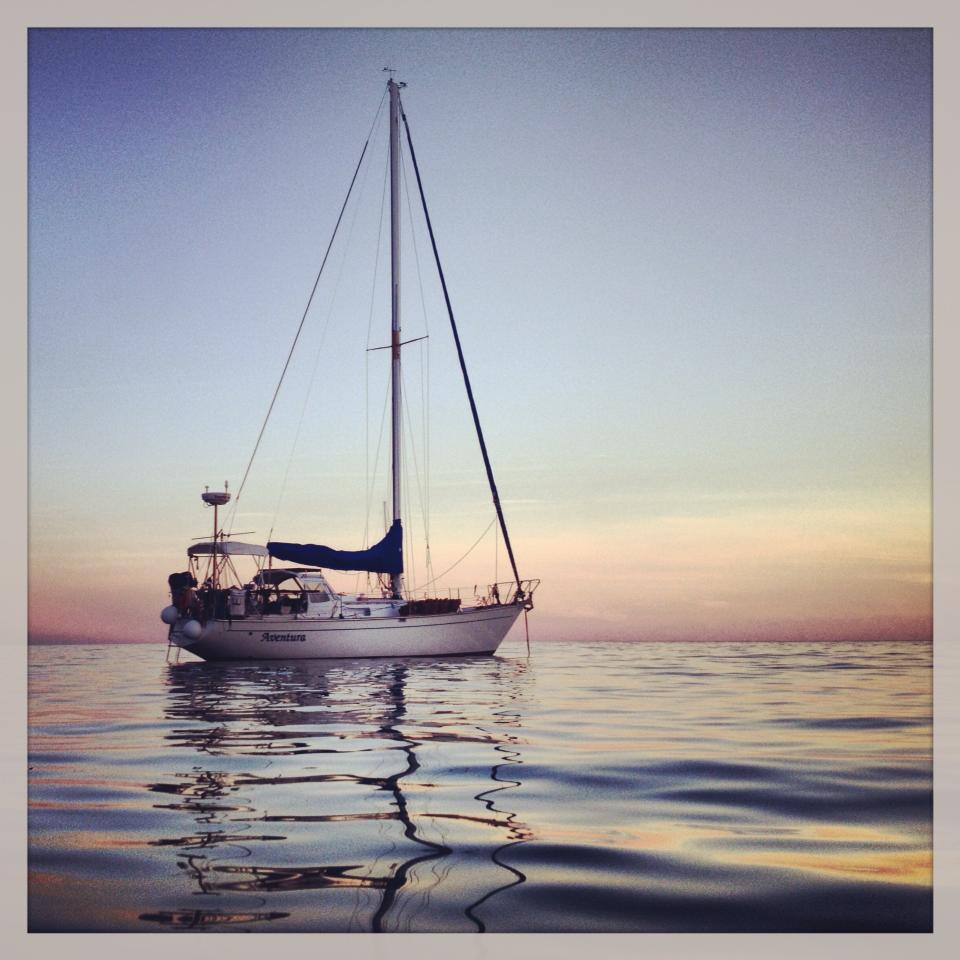
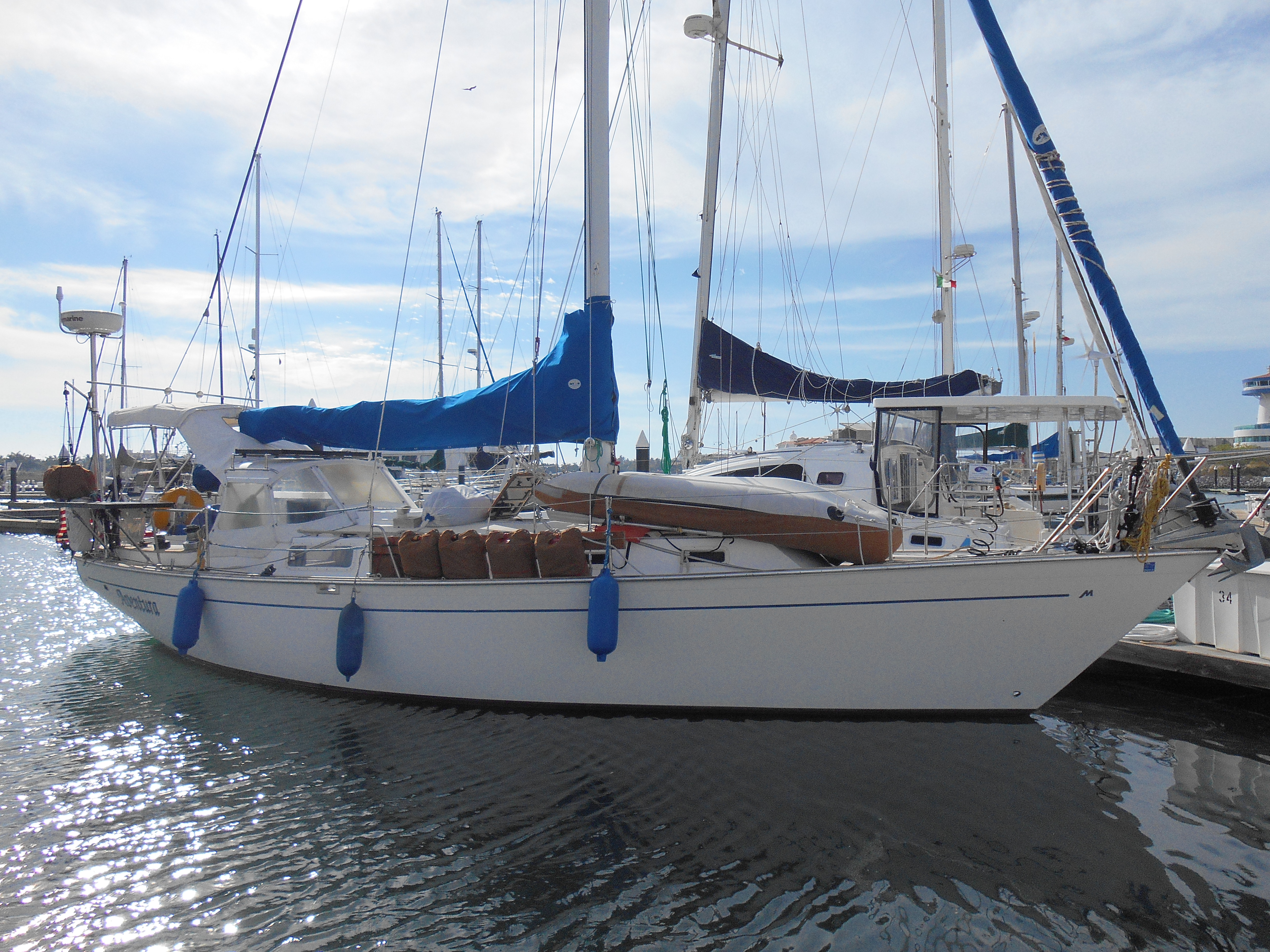
Aventura at anchor

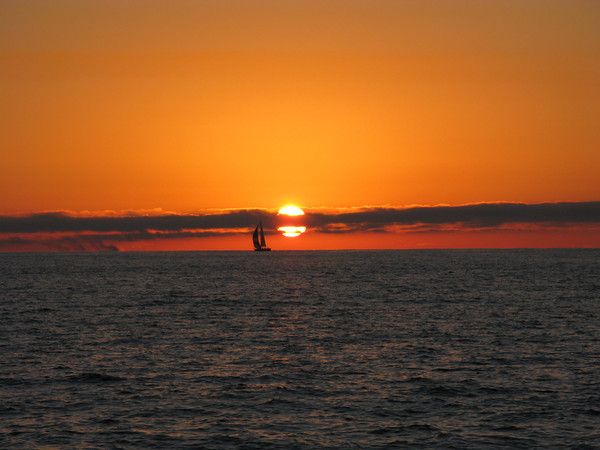
The law of unintended consequences is how I wound up living on a sailboat in Mexico. Sure, I’d gunk-holed in my little Catalina 25 around South Puget Sound and it was great. But, that was years ago and I was happily living in the country with my acreage and horses. That was when my pal, Ken Amman made me an offer I had to accept.

DSCN0529

“How’d you like the cheapest vacation of your life, pal?”, he asked. Ken had just bought a cool 35’ blue water boat that was located in a place that had never been on my radar: La Paz, BCS Mexico. Ken said all I had to do was show up – the fish tacos and lodging was on him.
Of course, “cheap” is one of my most favorite words. But the deal closer for me was that the offer was made during a particularly cold, rainy and grey Oregon winter.

DSCN0522

For the un-initiated, the Bible’s Noah had it made compared to those of us from the Pacific Northwest. Noah had to deal with “40 days and 40 nights” of rain – that takes us to about December 1st in Oregon. And, the rain continues to around mid-June. So, of course, I accepted Ken’s kind offer.
In other blogs, I’ll try to capture the authentic Mexican feel of La Paz and the incredibly beautiful and deserted anchorages of the Sea of Cortez. Words like “magical”, and “welcoming” start to define the area that Jacques Cousteau described as “The World’s Aquarium”. But it was the sailing that hooked me. I’d never lived on a well-conceived boat intended to travel oceans. And having something that size seized by strong winds and bashing thru big seas – with no other boats or signs of civilization in sight – pure sensory delight.

DSCN0372 (2)

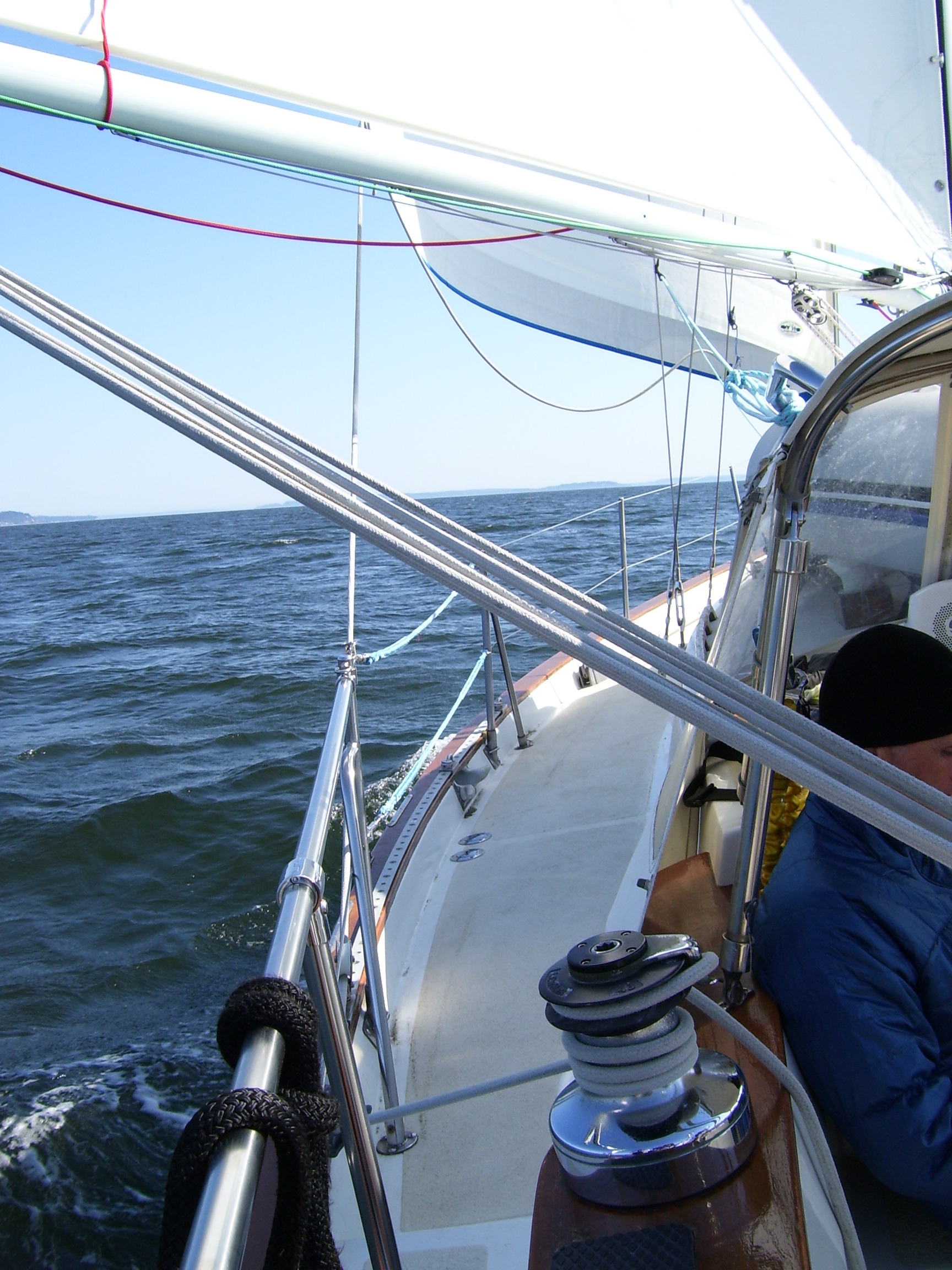
Even your skin feels different and more alive with a fine coating of salt; trying to walk below, grasping hand-holds as you go with the boat heeled 20 degrees and pitching.
The day before my scheduled return to civilization, a friend called to tell me that Oregon was having severe winter weather, that a pipe had burst and that my basement was filled with water. At that moment I was slathered in sun screen, listening to Cuban music and having a fine Lemonada con Mineral. At that moment, I knew I was returning to the land of wet parkas and vitamin D deficiencies. I almost started to cry. Not because of the pipes or rain or parkas – but because here, in Mexico, for the first time – life had started to make sense.
Two months later, in February 2010, I became the proud owner of a boat that would become Aventura; a boat I didn’t know how to sail. I bought a boat to sail in an ocean I’d never even been a passenger upon. It wasn’t a thinkin’ thing.

Sunset boat anchored
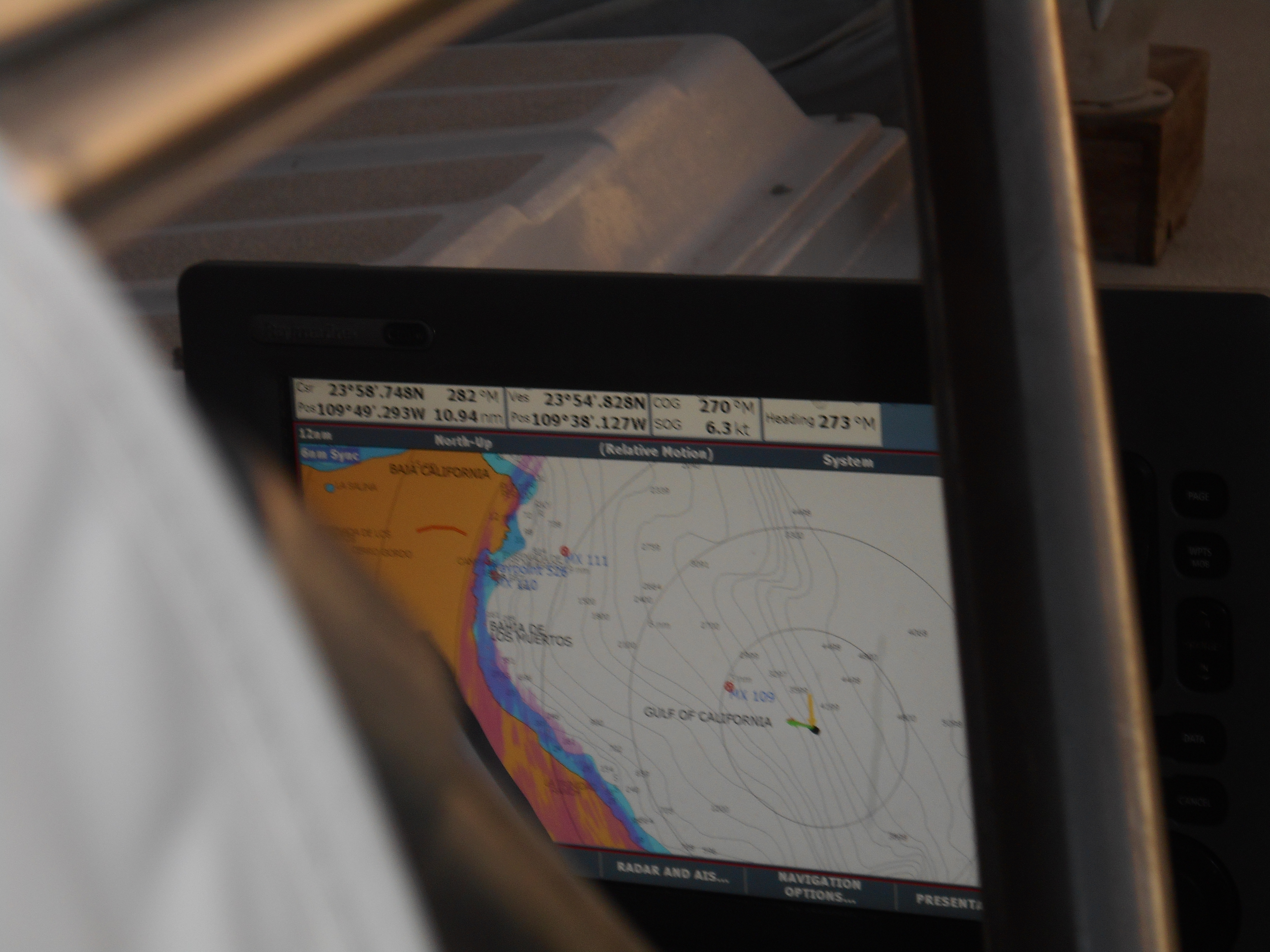
During the next two and a half years, all the sails, the ground tackle and the electronics were replaced. I and some of my more hardy and foolish friends (including Ken) figured out how to sail her. We went out when other boats were coming in. We learned to reef sails in strong winds, to dock in cross-currents and to survive Seattle shipping at night – relying on radar, AIS, and dead reckoning (and staring at the chart-plotter until our eyes crossed). There were a lot of mistakes.
The first time I took Aventura out after I got all the new electronics, she touched bottom. I was too busy playing the video game to sail the boat and watch the navigational buoys. Lesson learned.

DSCN0520

A squall laid the boats’ spreaders in the water – where she remained while I was paralyzed with indecision. Then, I released the sheets and she bobbed back upright like a punching dummy. Lesson learned. I didn’t know what a spring line was until I laid her sideways in a two-fer slip at a foreign marina while the locals looked on in disbelief. Then they righted her in the slip and showed me how to always put the spring line on first when docking to keep control. Lesson learned. ‘So many lessons – all paid for with the currency of surprise, occasional shock and frequent losses of “look good”. And, yeah – I’m still learning and I still screw up. We all do.

Aventura at Maz Marina
But with time, love, practice and experience come more aces in the hole, more shots in the locker – more “game” and better game plans. One of the more helpful things I heard was that 99% of the things that go wrong on the water are “merely dramatic and not life threatening”.
And, in the meantime…..I’d hear about this weird event: “The Baja HaHa”. That sounded interesting.

#####

DOWN THE WEST COAST OF NORTH AMERICA (August, 2012)

IMG_0120

Sitting at anchor in Mexico, now – with several thousand sea miles behind me – it is somewhat amusing to consider what Dale Geiger, Chris Miller and I did in the summer of 2012. Dale had never sailed before he met me, just after I got the boat. And, although Dale and I and other friends had sailed Aventura thru most of Puget Sound, The San Juan’s, and The Gulf Islands – we had never wetted her keel in the Ocean.

IMG_0048
But, there we were sailing out of the Straits of Juan de Fuca to make “The Big Left Turn” into the blue waters of the Pacific. Thank God we had Chris. Chris Miller was just a few sea miles shy of getting his US Coast Guard’s Master 100 Ton Certificate and signed on for the trip without ever meeting Dale or I – or seeing the boat.

Really. I’d been given Chris name and number and rang him up out of the blue.
“Hey, Chris. This is Greg and a friend and I are sailing my boat from Seattle to San Diego. Would you be interested in talking about joining us?”
“When are you going,” he asked.
“We’re leaving around August 1st,” I replied.
“Sure, I’ll do it”, said Chris.   Chris at beach
Stunned silence followed by awkwardness and then stammering…”But, we haven’t met – you haven’t seen the boat…You don’t know if I’m an asshole and I don’t know if you’re a crack-head serial killer,” yeah, that was the jist of it.
So, to appease me – Chris came up to Seattle where he liked the boat and we immediately began a friendship that has continued beyond San Diego and into the present.
It was an amazing voyage. It was long. And, given the ever-present marine layer between The Straits and Santa Barbara – it was cold and wet. Foulies were stretched over most of the clothes we owned except for time in the bunks.

Coos Bay on way South
My daughter Maggie (the speed demon motor-head) had sealed her fate as a non-sailor a year before. On that day, Mags was at the wheel while her brother Nate and I were adjusting sails. It was a perfect blue-bird day in Seattle with twelve knots 0f wind on a beam-reach and boat the slightly heeled making 5 Kts. SOG. I’d waited for this moment – since Maggie had never been keen on the entire concept of sailing. So, at that perfect moment of family/nature/sailing unity I asked, “So, whaddaya think of sailing, Mags?” She didn’t bat an eye, “How can you have fun at 5 miles an hour, Dad?”
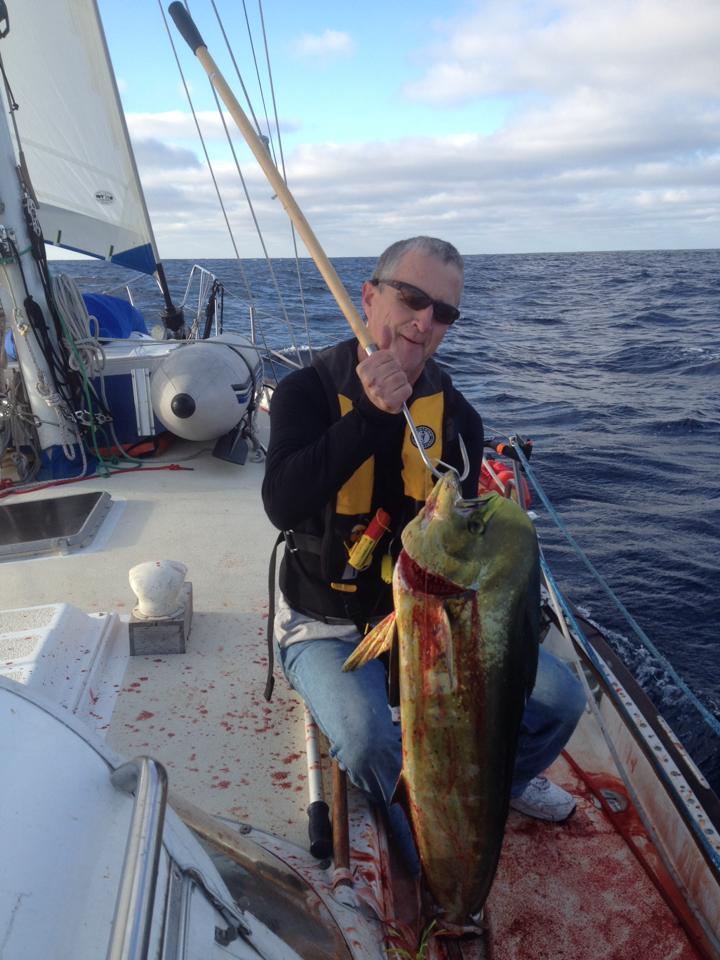
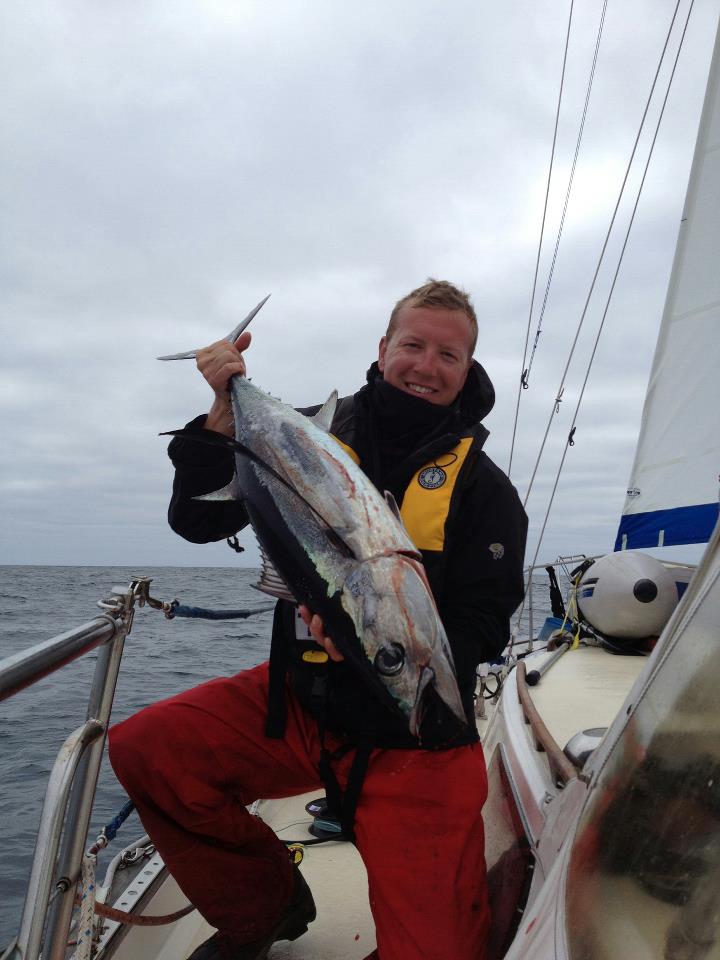
Well, I can and do have fun sailing at five miles an hour – and frequently less. But during the late Summer and early fall of 2012, Aventura’s slow slog thru the fog would have been drudgery except for the camaraderie and joy the three of us shared taking her down the entire West Coast of North America.Dale with Dorado Many people have done the same trip before and since; it’s one of the peak achievements of my life.Chris w Tuna on Way South


In part, that pride is due to some of the hardships and obstacles we overcame. We had a coolant loss forty miles offshore and 50 miles upwind of Coos Bay in strong winds and big seas at night and – without an engine – we had one shot to sail her across the bar the next morning. Chris got us there. We had problems with the windlass, the auto-pilot, the macerator, and the charger/inverter. Chris fixed them. We had to duck out of a severe weather system in Humbolt Bay – just above the most treacherous water of the trip: Cape Mendocino.

The guy at the National Weather Service that issues the NOAA reports finally gave a luke-warm thumbs up to leaving the bay and making a run for it. “Brian” said it would be tough. It was. 30 kt winds and 18’ seas (luckily both coming from the aft quarter) for 14 hours. Chris showed me how to hand-steer the aft quarter into the seas to avoid a “poop” from the stern or a broach from the beam. I’ve never been in big seas since that I haven’t said a silent “Thanks, Chris” for the lesson. Point Conception was almost as bad.

But then, magically – we turned a corner and there in front of us was warm, blue skies …. and…..and PALM TREES. We had sailed from the forests of Doug Fir to the Palm Trees of Santa Barbara. Suddenly life was very, very good and the trip was a success.Aventura at Anchor


Chris oversaw the re-engineering of our auto-pilot’s set-screw assembly that had given out around Mendocino and helped raise the waterline in San Diego.

One of the few regrets of our trip – for all of us – was that Chris couldn’t manage the time to enjoy the fruits of our voyage to San Diego; the next leg of the voyage: to Cabo San Lucas via the Baja HaHa.

###

AVENTURA’S 2012 BAJA HAHA

2012 HaHa B St Maria

Despite all the pleading that pride would allow, the MVP of our passage from Seattle to San Diego (Chris Miller) couldn’t join us for the HaHa. And, that was a shame. Because the Baja HaHa is one of the very few events I’ve found that lives up to its hype. Each year – at the end of the hurricane season (around Nov. 1st) – over one hundred sailboats and crew converge on San Diego to join in a well-organized rally to Cabo San Lucas, BCS (Baja California Sur).

2012 Ha Ha at Anchor
And, of course, when talking about a large group of sailors, the phrase “well-organized” is a relative thing: kinda like herding butterflies.

It had taken two and a half years of outfitting the boat – and particularly, learning to sail Aventura – before I felt the boat and I were ready for the trip. And, yes “outfitting” a well-loved (if previously benignly neglected) blue water sailboat is not cheap. I’ve heard that the best way for a guy to know if he’s cut out to be a sailor is to step into a cold shower with all his clothes on – and start tearing up $100 bills. If that’s “fun”, he qualifies to start spending B.O.A.T. (bring on another thousand) bucks.

2012 HaHa Aventura Crew
So Chris was out and I really wanted an experienced third guy for the trip. One of the biggest risk factors when passage-making is fatigue. That’s what causes more mistakes than weather or break-downs combined. And, with a crew of three – everyone gets a full 8 hours of sleep every 24 hours. And, yes – that does require some initial gentle persuasion and scheduling; because in the beginning – nobody wants to sleep. We got very lucky. One of Chris’ best friends was a big, good looking rigger with a cool name: Brooks Dollar. In addition to being a rigger and an excellent hand on-deck – Brooks was previously trained as a chef. It doesn’t get any better than that. Brooks had just flipped a Bristol Channel Pilot Cutter he’d rehabbed and was ready for some time on the water.
The third member was Dale Geiger an Investigator for the Oregon Department of Justice. Dale’s sailing experience may have been limited; his enthusiasm for the trip was solid.

100_1874


Dale is a very good friend and I will always appreciate his time and efforts in sailing Aventura all the way from Seattle, Washington to La Paz, BCS.
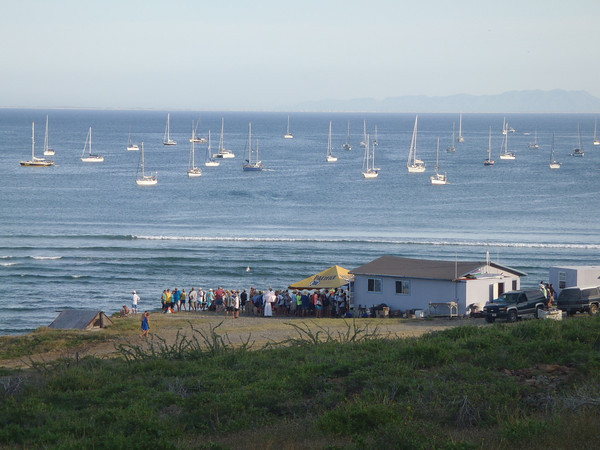
All 120 sailboats left San Diego harbor on Oct. 29, 2012 and headed south. The trip to the Cape (Cabo San Lucas) is broken up into three legs of approximately 300 miles, each. The first stop is Turtle Bay for a couple days of R & R after a 2- 3 day passage. Then comes Mag Bay – an almost deserted place that comes alive each year when the fleet arrives. As usual, there was a live band, beer and a great beach BBQ – complete with volley-ball, base-ball and everyone’s favorite pastime: watching newbies like us try to do their first beach landings (dinghy) in the surf.

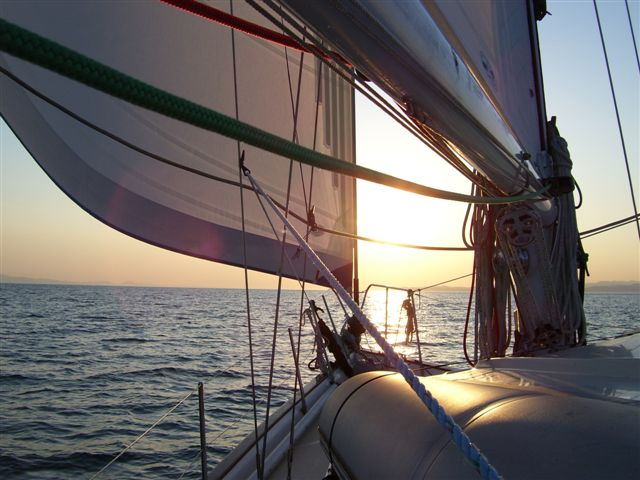
2012 HaHa Sunset Sailing

The last leg ends in Cabo with a bash among what has now become a fairly cohesive group. Each crew member gets a certificate commemorating his status as a “Baja Ha-Ha Survivor”. Each boat from each class gets an award.


In keeping with the non-competitive nature of the rally, the first two finishers in each class get “real” first and second place awards. The rest of us all get a “Third Place” Ha-Ha “fish” award. Everyone always keeps the fish award.
But, as one might imagine the trip is all about the journey. There were no foulies and slacks were rare.

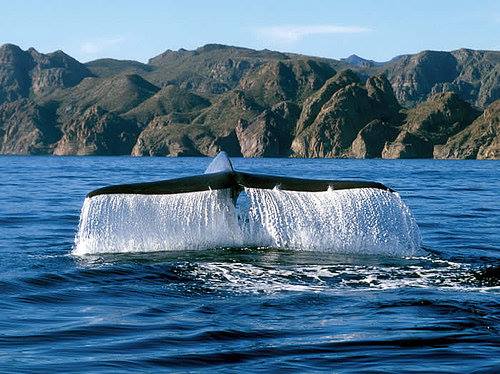
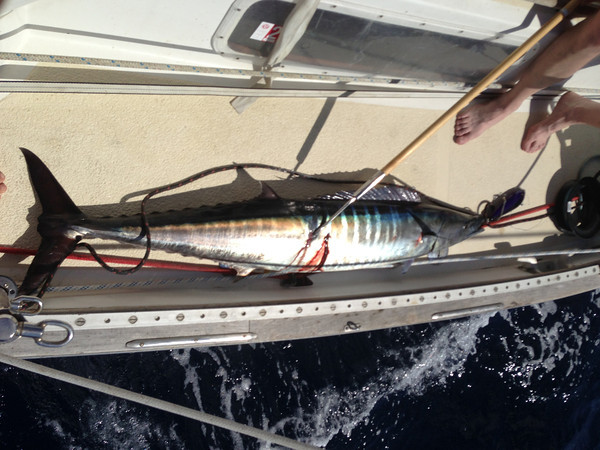
Whale TailSunscreen became a daily ritual – as did setting out the hand-retrieve fishing lines. I’ve never had more fish. We got it down to a science: One guy would be hauling in the next entre’ while another was turning on the salt-water wash-down pump and gathering the necessary cutting board, knife, paper towels and Baggies.

2012 HaHa Wahoo for Aventura

The third guy would start the grill and be sure the Yashida’s was handy. Oh, yeah – he had to keep sailing the boat, too. Seared Ahi, Ahi and Dorado (mahi-mahi) and Wahoo sushi and ceviche. We finally got sick of the tuna and quit using the lure the Ahi loved. It didn’t matter – they still bit. We gave away gallon bags of filleted fish at the beach parties. And Brooks’ ceviche was the rave.
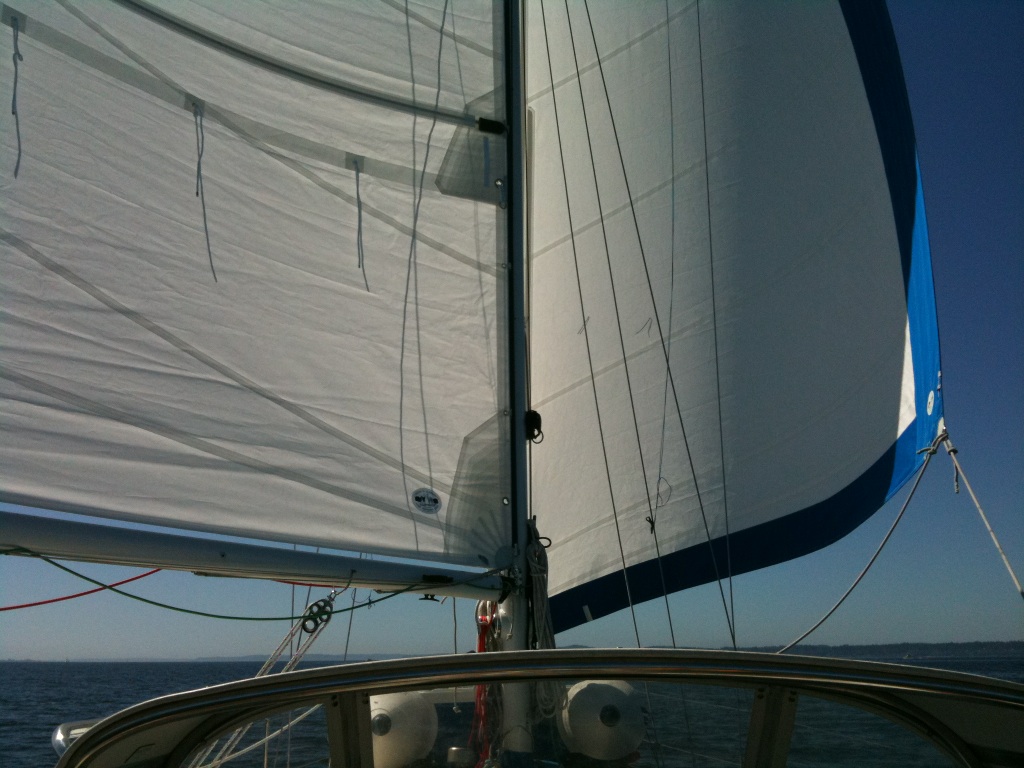
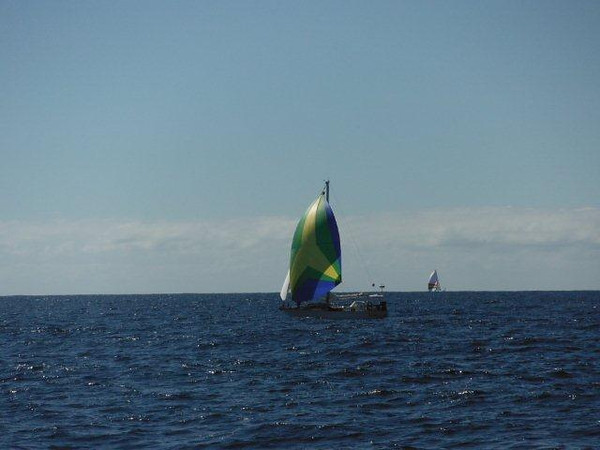
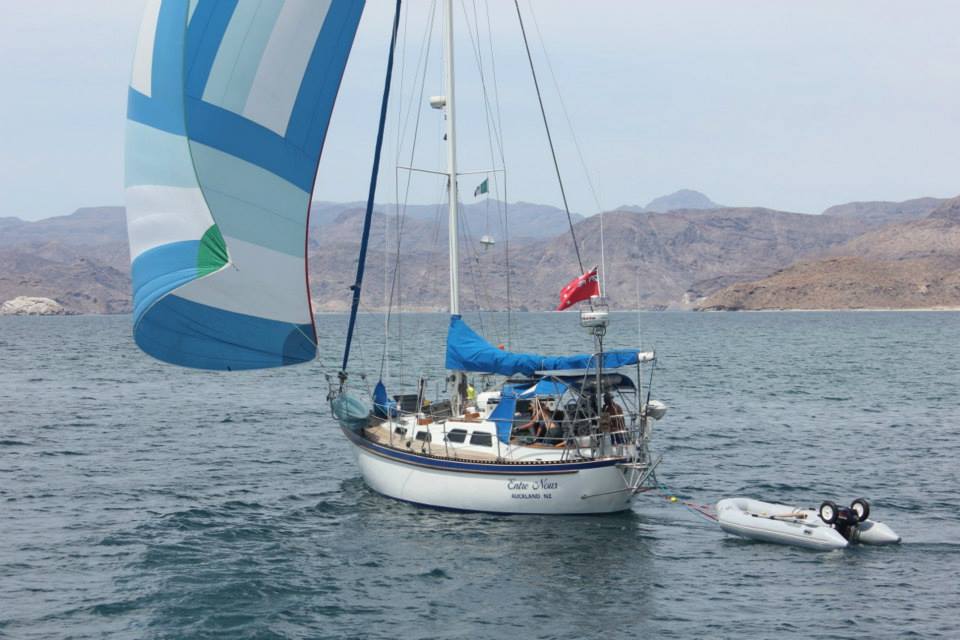
One of the best moments of the trip came when there was a very steady – but light – breeze directly on our “six”. It was too light to do a “wing on wing”, although we tried. Improvisation and inspiration (OK it was Brooks’ idea) caused us to try something odd. We poled out the jib to windward and then raised the asymmetrical spinnaker to leeward. Two head-sails. And, it worked. Believe it or not, in a very steady 5 kts of breeze, we maintained 4 – 4.5kts Speed over Ground.

Baja HaHa 2012 Aventura w Dual Head Sails

Magic. Later, I found out that a photo of Aventura with her dual head-sails made it into the Latitude 38 magazine (the magazine is the sponsor for the HaHa). It’s kinda the amateur sailor’s version of the “Cover of the Rolling Stone”.
We made it to Cabo, ate the burger, got the Tee-shirt –

2012 HaHa TaTas

(OK not THAT Tee-shirt) and said goodbye to Brooks. Dale and I continued on to La Paz. And the life in Mexico began.

###

An Exceptional Sailor

Entering Chacala 1

My arrival in La Cruz started off abit awkward. The Harbor-master with excellent English promised he’d assigned me to a “head-in port-tie” slip. Of course it wasn’t a port (left sided) slip and there was confusion in getting the boat secured without the right-sided dock lines being readily available. In other words, it was an average day in Mexico and no harm done.

DSCN0229 I did make a note that “next time” I’d have the dock lines and fenders out on BOTH sides. If I remember.

But, I digress.
As I was coming in, I noticed that the guy in the boat next to me hadn’t (as usual around boats/marinas) left his cockpit to catch a dock-line from me. In my momentary petulance, I considered an original if sarcastic quip about “Thanks for the help”.Thankfully, this time I shut up.

Because after a few minutes, my neighbor, John, came tapping up to the side of Aventura with his white cane. John is completely blind. He’s also the skipper of his boat and does all the sail handling (raising, reefing, striking sails) on his boat. John has been sailing with and without sight for 40 years and lost his vision to a hereditary problem 25 years ago. His wife was his crew until four years ago when she died of cancer.

Now, John advertises for – and has had good luck finding – competent crew to handle the “sight tasks” like anchoring, navigating, docking, etc. This year, he sailed from Ventura, CA to La Cruz and had a blast. He and his then-friend were actively planning to sail to the South Pacific (Puddle Jump). Then the friend’s “SO” got involved and John is back online looking for his next adventure/crew.
By this time we were having a drink onboard Aventura and I was blown away. First off, even with all my faculties (often debatable) I find sailing a boat quite challenging.Entre Nous

‘Had never even considered the possibility it could be done by a sightless skipper. So, John started talking about all the apps and gadgets he has that “talk” to him, letting him know the status of the various boat systems. He uses similar technology to keep up with finances, emails, etc. His attitude is very matter-of-fact: I do it and it’s not that hard.

Of course, John wouldn’t say something like that.
After a few days, I noticed that he had a morning ritual. He’s an early riser (well before the 8:30am Cruiser “net”) and, while the dew is still heavy on his boat – John wipes down every surface. He said he does that to keep his boat clean and looking good. As a contrast, none of John’s sighted neighbors have anything like a similar routine.John walks to the stores and the markets, he rides the buses to different towns and does his shopping; his life is rich, full and independent. But, I kept thinking of all my near-misses and almost catastrophes; I still didn’t understand why Bill chose to entertain such risks in his sailing lifestyle.

And, then he told me how the blind live like shut-ins on land; how the risks of cars and bicycles and dogs and stairs and criminals are even worse as a dirt dweller than at sea. John literally knows his environment (boat) by hand.
But, “It’s the Cruisers” he said. He talked about the constant stream of people who instantly became friends and helpers – taking him to market, cooking and entertaining him, helping with the cash machines and counting pesos at the store.Cruiser Party

You see, John has immediate and intimate access to some of the best people around – living closely and happily right next to him. His life is a life of inclusion rather than exclusion.
And, as John talked I was reminded of the innumerable times that, without asking, cruisers had seen me struggling and pitched in; how immediate and open our community is here on the water – and more so as one gets further off the beaten path.
So, that’s how John helped me, that day. He reminded me of all of the things that are right in the world – of the significance of a simple kind gesture and the importance of gratitude. John is just another guy that happily lives on his boat amongst friends: old, new and those yet to be met.

POST SCRIPT: The above was written last year. During my time with John, he mentioned the possibility of sailing his boat to Hawaii. Of course, we all talk about sailing to distant lands – so I nodded and the conversation wandered elsewhere.

As I was preparing to publish the article, I googled John – to see what he’d been up to. Part of me wishes I hadn’t. The following is from the Huffington Post. The Good News is that John accomplished a dream most sighted sailors never have the courage or skill to attempt; but there’s more:

John Berg, Blind Sailor, Successfully Sails From Mexico To Hawaii, Only To Crash On Arrival
The Huffington Post | By Carla Herreria

n-SAILOR-KONA-large570

John Berg, a legally blind sailor, completed an impressive 20-day voyage from the shores of Mexico all the way to the waters of Hawaii only to run into a huge letdown when he got there. After dropping off two crew members at Hilo on Hawaii’s Big Island, Berg crashed his boat onto the reef while sailing toward the Kona side of the island.

Berg’s 40-foot boat, dubbed the Seaquel, entered Hawaiian waters on Sunday, according to Hawaii News Now. His navigation equipment failed and he mistakenly sailed close to shore where rough waves knocked the boat over.

“He wandered into the surf. It was a navigational error,” John Dour, a local resident who spoke to Berg a day after the crash, said to news reporters. “The waves picked them up and threw them on the beach.”

Dour told Hawaii News Now that Berg and a female crew member had to clip themselves together with a harness after the accident and make their way back to shore in the dark. There was no indication they were injured during the crash.

The Seaquel, where Berg had been reportedly living for the past 14 years, was uninsured. It was equipped with all the latest technology he needed to sail as a blind man, including electronics designed to give vocal prompts.

The boat was left on the beach overnight and found looted the next day. Thieves made away with Berg’s valuable equipment, including the boat’s steering wheel.

“The guy was completely devastated,” Dour said. “You know, he lost his home. Everything.”

………………………………………………………………………………………………………………………………..

Final Thought:

Newspapers like to wrap up their articles with finality; in this case a depressing finality. But, some of us – and particularly John – are too resilient to give up or declare defeat. The next time I check on him, I expect John to be pursing his next dream with grace and vigor – wherever that may be.

#####

Single-Handed vs Couple-Cruising

100_1903

“Single-Handing” is the phrase used to describe sailing in the absence of acrimony and resentment. OK, that’s not true. It’s simply a boat being managed and sailed by one person, usually a man; although, one of the best single-handers in La Paz is a woman – currently planning her next cruise to Hawaii.

Most would admit that having a second pair of eyes ears and hands aboard is ideal – if they belong to the right person. And, of course, there-in lies the rub. Most successful cruisers are, in fact couples. They’ve learned to share long distances and small places with a shared sense of adventure and mutual respect. The failure rate of aspiring cruiser-couples is hard to measure since the first thing that happens is that they (or at least one of them) leaves.

Me sailing dirty Tee


Most people don’t know what they’re getting into at the time they’re casting off the lines and adopting  the cruising life. Sea-sickness, absence of common conveniences, time and distance from friends and families are only the beginning. Cruising is often described as “doing boat repairs in exotic places”. There’s occasional frustration; little things can become larger in a living space much smaller than a one car garage.

Aventura was initially envisioned as a couple’s cruiser. There were several years of happy preparation, doing increasingly longer voyages in the PNW (Puget Sound, and beyond). In the end, concerns about being absent from children and family, and a lack of desire to actually “sail the boat” (rather than enjoying life tied to a dock) resulted in a silent mutiny (thankfully, prior to matrimony).

IMG_0111

The decision to continue the cruising lifestyle was unquestioned and happily made. Luckily, the transition to single-handing was much easier than expected. The boat, a Morgan 382 – while certainly big enough for two – is quite readily handled by only one. Larger boats (>42 – 44′) can be much more difficult, especially around docks and crowded anchorages. Much more importantly, though, is the welcoming and inclusive nature of the cruising community. The social and economic stratification so pervasive “in the world” are, for the most-part, absent among cruisers.

One of the first things one notices when hanging around cruisers is that they almost never ask the first question one invariably gets in the world, “And, what do you do for a living?” First off, we’re mostly retired – but that’s not the reason for the omission. The fact is that no one cares who you “used to be”, what you “used to do” or who you daddy is. Here, what counts is who you are and does your presence add to the moment or occasion. And, unlike “the world”, where a divorce or separation makes couples uncomfortable around a single – the inclusive and wandering nature of cruisers assures continued happy company, activities and friendship.

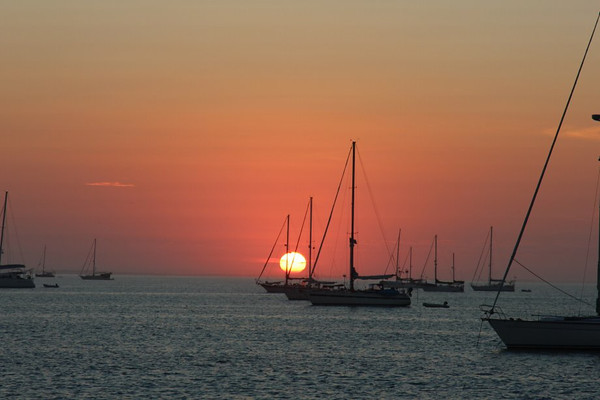
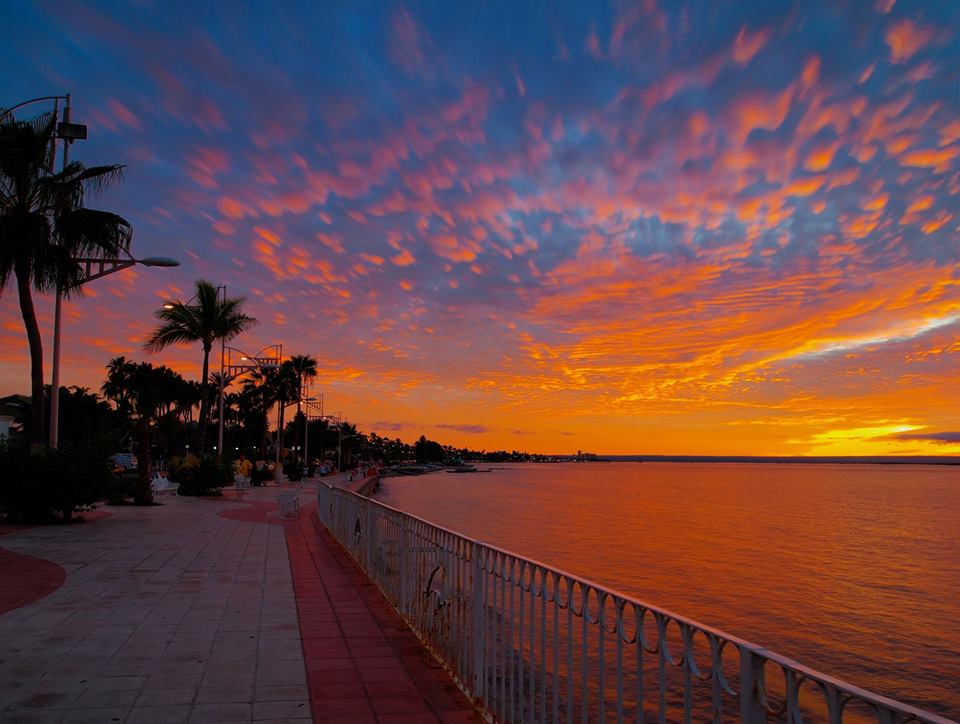
La Paz Sunset

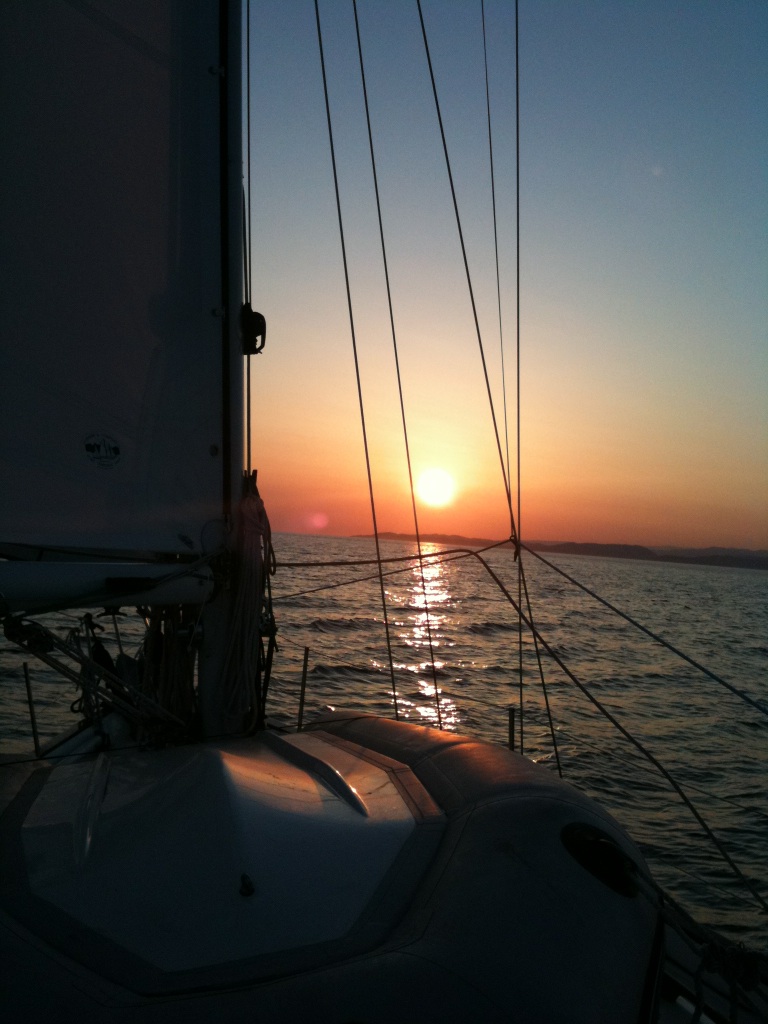
So, in reality, single-handing is what one does with one’s boat – under sail. At the dock, in a palapa restaurant or in a populated anchorage, we all get the same sunsets, the same fish tacos and enjoy the shared companionship of the cruising community.

And, yes – I’m guessing that most single-handers (Aventura, included) might prefer that second set of hands (and other, more interesting bits) and eyes to share the moments, grand and mundane. And, one doesn’t have to “BYO”. The cruising community is an expanding universe where kindred spirits play and sail. The world is more large and immediate while living aboard. Every new place is unique and filled with interesting friends, yet to be met. That happy crew may be just beyond the next sunset.

IMG_0077